Finding the right classic coffee label typography options means balancing nostalgia with strict legibility. Your packaging needs to communicate the roast profile and brand heritage instantly, even from across a crowded cafe shelf.
What Defines Retro Coffee Lettering?
Retro coffee typography relies heavily on slab serifs, ornate Victorian scripts, and slightly imperfect hand-drawn sans-serifs. These styles evoke the warmth and craftsmanship of early 20th-century roasteries.
You should use these styles when your brand focuses on artisanal brewing methods, single-origin beans, or a cozy neighborhood atmosphere. When reviewing heritage font pairings, look for typefaces that feature subtle ligatures or vintage ink traps to add authentic character.
How to Match Fonts to Your Packaging and Roast
Just as a stylist considers hair texture, a packaging designer must consider the physical texture of your coffee bag. Kraft paper bags absorb ink and blur fine details, making bold, chunky slab serifs the safest choice for clear reading.
Matte black bags with metallic foil stamping allow for much finer, art-deco inspired linework. The smooth surface holds sharp edges, letting you use highly detailed vintage badges without losing clarity.
For dark roasts, heavy and grounded typefaces communicate richness and intensity. Light roasts pair better with elegant, thin-line vintage scripts that suggest bright, delicate flavor notes.
Consider the specific era you want to reference. Building a cohesive mid-century brand identity requires clean, geometric retro fonts, while an 1890s apothecary vibe demands intricate woodblock styles.
Common Label Design Mistakes to Avoid
The most frequent error is over-distressing the text. Adding too much grit or texture to a small font makes the origin details and tasting notes completely unreadable on a printed bag.
Another issue is poor visual hierarchy. Your brand name should dominate, followed by the roast level, with brewing instructions kept small and clean. Never use a highly decorative script for the net weight or legal disclaimers.
Designers often forget that coffee bags expand when filled with beans. A perfectly flat design on your screen might warp across the curves of a stuffed gusseted bag, so always test your layout on a 3D template.
If you are also selecting typefaces for physical storefronts, ensure your menu boards and packaging share the same core font family to maintain visual consistency across all customer touchpoints.
Fixing Layout Issues in Your Studio
If your label looks cluttered, increase the negative space around the main logo. Retro designs need room to breathe, especially when surrounded by decorative borders or badge shapes.
Check your kerning manually. Automated tracking often ruins the flow of vintage scripts, so adjust the space between letters by eye to ensure the connections look natural and intentional.
Pre-Press Checklist for Coffee Labels
- Print a test label at actual size on your chosen bag material to check legibility and ink spread.
- Verify that the contrast between the ink color and the bag color meets basic readability standards.
- Ensure all vintage ornaments and flourishes point toward the center of the label, guiding the eye back to the brand name.
- Convert all text to outlines before sending the file to the printer to prevent font substitution errors.
 Retro Style Coffee Brand Typography Guide
 Vintage Coffee Shop Font Selection
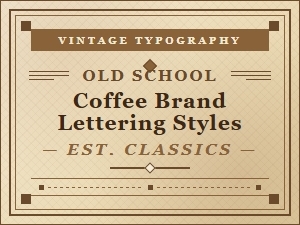 Classic Coffee Brand Lettering Styles
 Handwritten Coffee Brand Font Styles for Small Businesses
 Best Bold Fonts for Coffee Brand Logo
 Handwritten Coffee Logo Font Inspiration